Getting chargers in the ground: How we’re expanding Zero across New Zealand
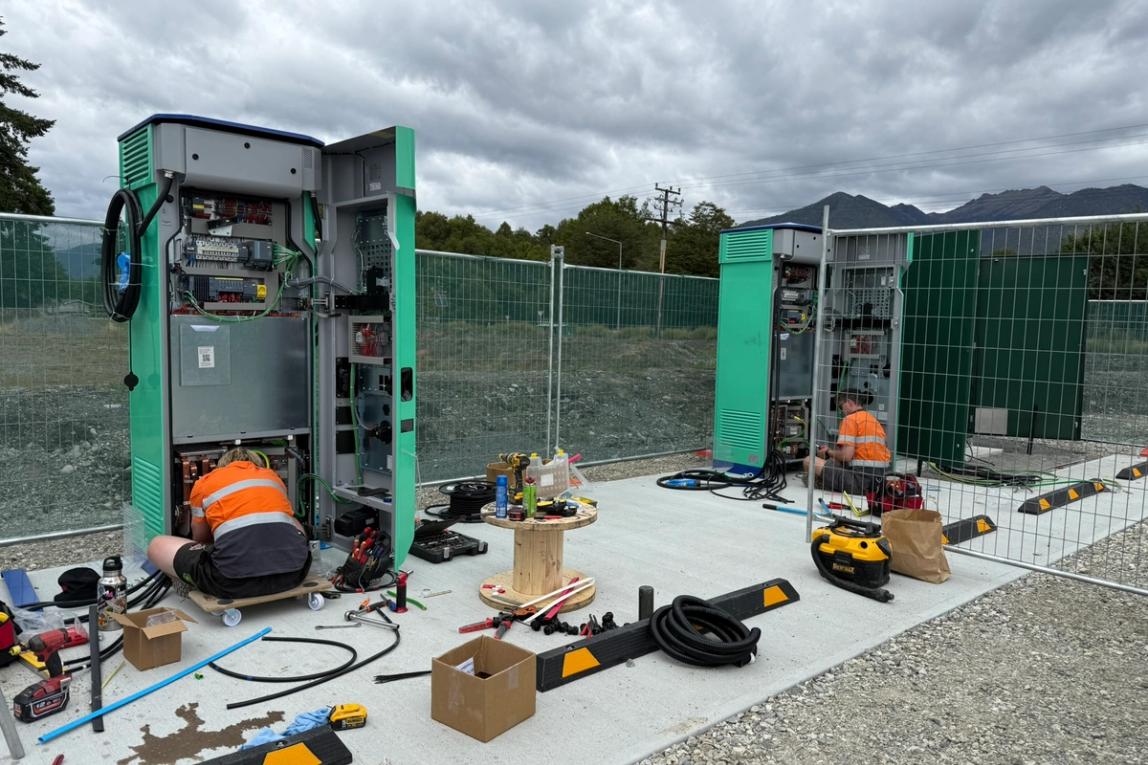
Building a nationwide EV charging network isn’t simple, but it’s essential. At Meridian Energy, through our EV charging network Zero, we’re focused on getting fast, reliable chargers into the communities that need them most, so more New Zealanders can make the shift to low-emissions transport.
“It’s really important that we get this right,” says Rob Woods, Asset Deployment and Operations Lead at Meridian. “Until we can get the chargers out there where they’re needed by New Zealanders, we won’t see the transition and the decarbonisation that we need to see as a country.”
Every site we build represents a complex mix of planning, engineering and local partnership – and an opportunity to make EV travel easier across the country.
How we choose new charging locations
When we’re selecting new sites for Zero, our goal is simple: fill the gaps and make long distance EV travel seamless.
Those gaps aren’t just geographical, sometimes they’re on the local power network. That’s why one of our first steps is understanding how much capacity is actually available.
“Most of those lines have been designed to facilitate houses and shops,” says Michel Armiento, Project Manager at Meridian. “They haven’t been designed with the idea that somebody would want to take a large amount of power out to do EV charging.”
This early work helps us understand what upgrades are needed and whether a site can support fast charging.
Designing sites that work for drivers today and tomorrow
Once we’ve chosen a location, we move into design. Deciding how many chargers are needed, what size they should be and how we can future proof the site as EV uptake grows. This up front work is critical.
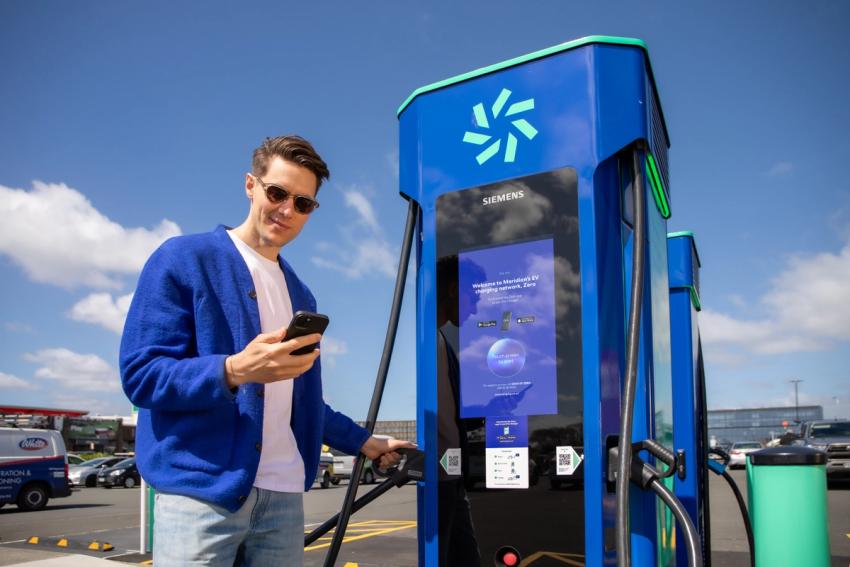
While our earlier sites were mainly AC chargers, we’ve shifted firmly into DC fast charging.
“We made a shift to DC because that’s what everybody wants to be using now,” says Michel. “They want to fast charge, they want to be in and out.”
But bigger, faster chargers mean higher power needs and often more complex engineering behind the scenes.
Partnering with landowners and upgrading power supply
We work closely with local businesses, councils and landowners to host our chargers. Most are eager to support their community and see the benefits EV charging can bring, but DC fast charging requires more space and more infrastructure.
“Often with these network upgrades we also have to put in the transformer,” says Michel. “It’s a lot for a landowner to take in, so we need to have those discussions early.”
By working through these details upfront, we can design sites that work for landowners, their customers and all EV drivers.
When things take longer than planned
Every site is different and sometimes unexpected challenges slow things down – ground conditions, network constraints, weather, access or engineering complexity. The EV industry is still very new in New Zealand compared with other parts of the world and the global industry is still evolving.
“I don’t think there is an expert in the field that we can look to at the moment,” says Michel. “Every site is unique and so we’re learning all the time.”
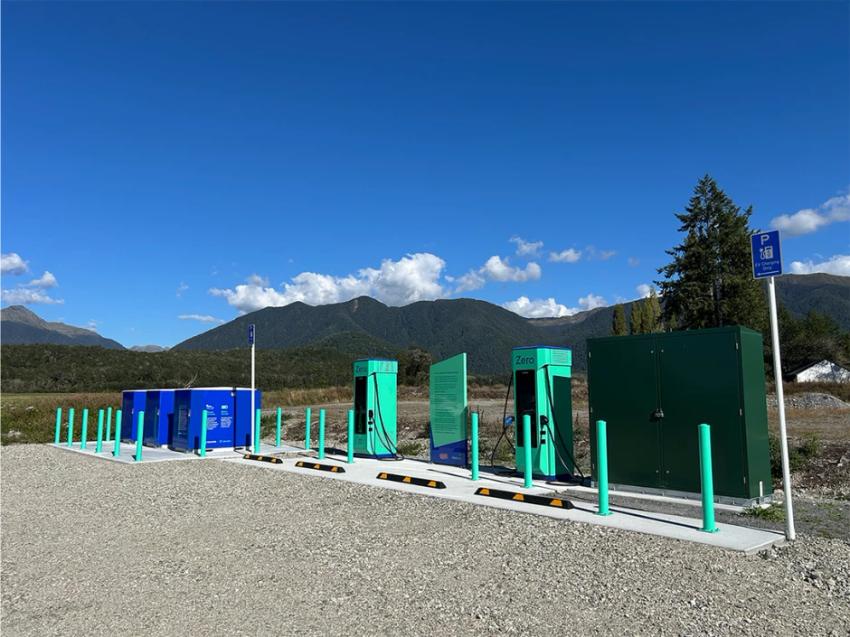
A great example is Springs Junction, one of our best-known charging locations and one that took a lot of work and time to bring to life.
Its remote location posed a unique challenge, so we rolled up our sleeves and got creative. To power these chargers without straining the local grid, we deployed a cutting-edge Battery Energy Storage System (BESS) using repurposed EV batteries.
And here's the clever bit. The BESS charges overnight when demand is low, then supplies energy to the chargers during the day.
“No one had ever done it before,” says Michel. “All the engineering that went into that project is amazing, but it all just takes time.”
Where we’re headed next
Our goal for the next few years is clear. Keep expanding Zero into the places drivers need it most and build a smarter, more efficient network.
“We expect to see more use of battery technology to help supply power in remote locations, smooth peaks and get chargers into places where the grid alone can’t support them,” says Rob.
And we always want to hear from drivers. It’s your feedback that charges us to keep going!
“If there are places that you want to see chargers, keep talking to us,” says Michel. “If we can get chargers in there, we absolutely will.”
We know many EV drivers are eager to see new sites open and our team is working as hard as we can to make that happen.