Tips for planning an EV roadie in New Zealand
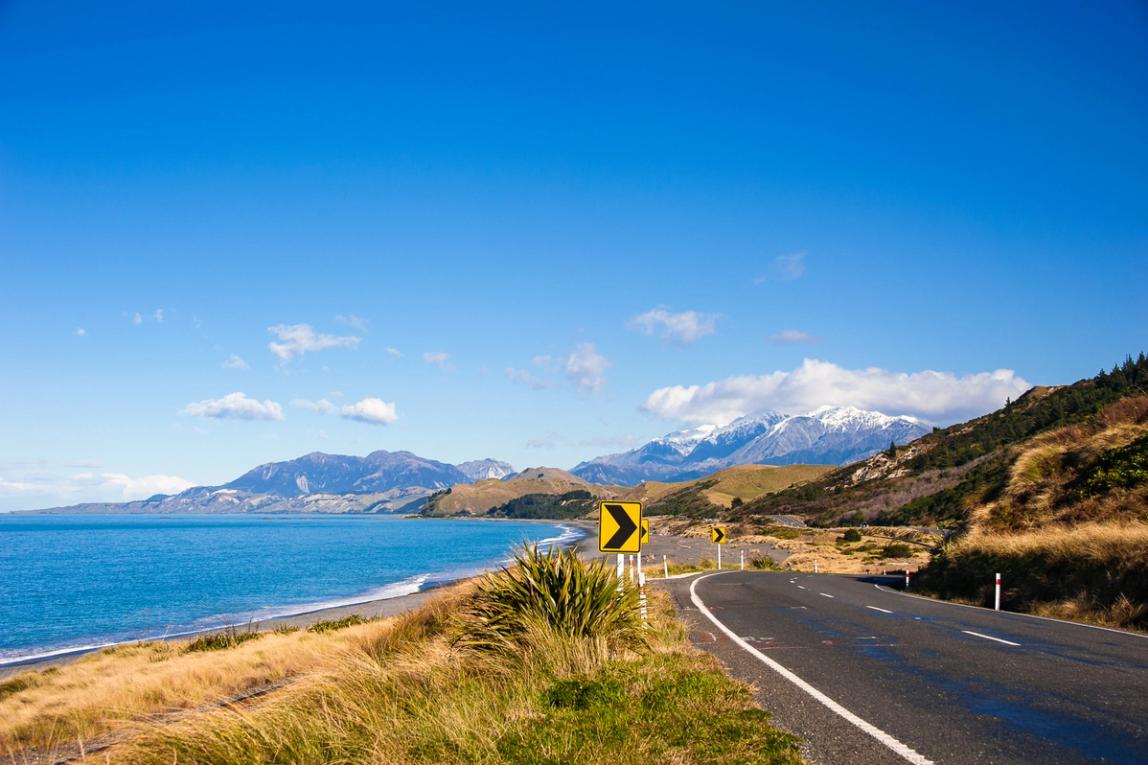
New Zealanders have always loved a good roadie. Packing the car, picking a direction and seeing where the highway takes you is almost a rite of passage, whether it’s heading up the coast for a festival, driving between whānau for Christmas or finally ticking off that South Island loop. Electric vehicles slot into that tradition surprisingly well. They’re quiet, smooth to drive and far cheaper to run than most petrol cars, but they do ask you to think a little differently about how you plan the journey.
Range, charging time and charger locations all matter more in an EV than they do in a petrol car. That can feel daunting if you’re used to just filling up wherever you see a service station. The good news is that public charging infrastructure has grown rapidly across Aotearoa, and networks like Zero, powered by Meridian, now give you reliable coverage in many of the places Kiwis travel for holidays.
With a bit of planning before you leave, an EV road trip is easier than most people expect. This guide walks through the key things to think about before you hit the road, from understanding your EV’s range to picking the right chargers and finding great places to stop along the way, with the Zero network as a trusted partner in the background.
Understanding your EV's range and capabilities
Rated range vs real world driving
One of the biggest mindset shifts when you move from petrol to electric is how you think about range. Your EV will have a rated range from the manufacturer, often based on steady driving in mild conditions. Real world range, especially in Aotearoa, looks a bit different.
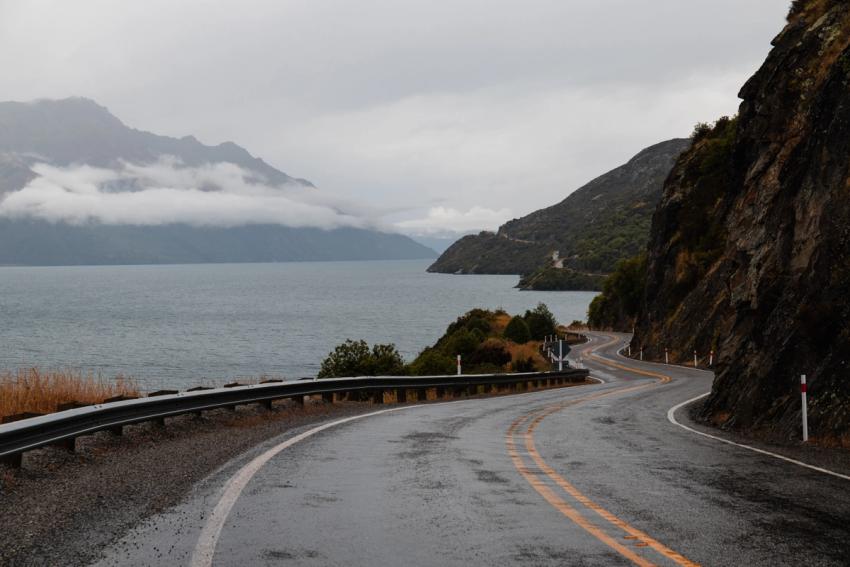
Our roads are hilly, often windy and can change quickly from motorways to tight rural corners. Climbing over the Remutaka Range, heading into the Ruapehu district or winding your way into Queenstown all ask more of your battery than a flat run on State Highway 1. Steeper climbs mean the motor has to work harder, which uses more energy. On the flip side, long downhill sections give you some of that energy back through regenerative braking, which turns the motor into a generator and gently tops the battery back up as you coast or brake.
How conditions and comfort affect range
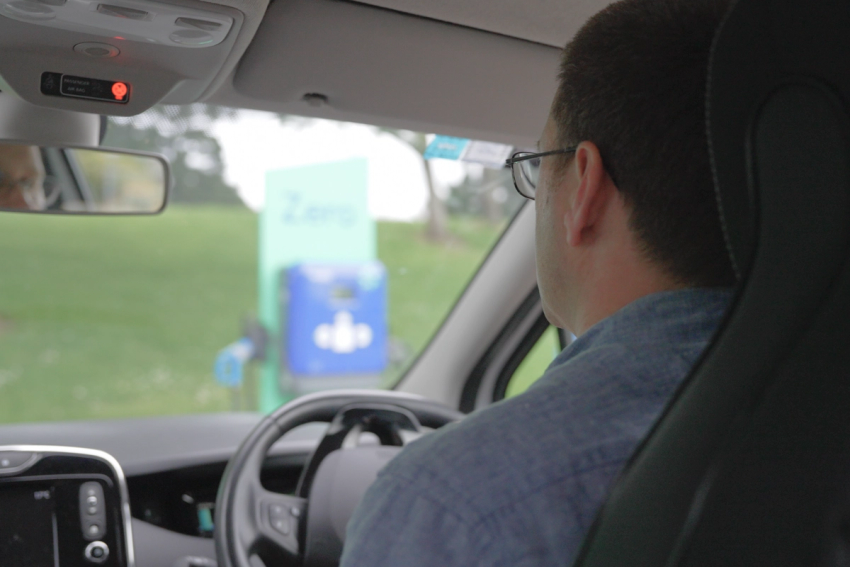
Weather and cabin comfort also play a role. Very hot or cold days can reduce battery efficiency and running air conditioning or heating will chip away at your range. Modern EVs manage battery temperature carefully behind the scenes, but you’ll still notice that a loaded car on a scorching Canterbury afternoon behaves differently to an empty car on a mild Wellington commute.
The key is not to be scared of this, but to be aware of it. Before a bigger trip, spend a bit of time watching how your range prediction behaves on local drives over hills or in different weather. Notice what happens when you sit at 100km/h for a long stretch, compared with rolling through town traffic. That feel for your own vehicle is more useful than any number from your car’s manufacturer.
Building confidence in typical NZ journeys
For most popular New Zealand journeys, range anxiety is manageable with modest planning. A mid-sized EV can comfortably handle legs like Auckland to Hamilton, Wellington to Palmerston North or Christchurch to Tekapo with plenty of buffer, especially when you know there are Zero chargers along the way if you want to top up earlier than planned. Once you understand what your car is capable of in real conditions, planning the rest of the roadie becomes much easier.
Trip and route planning essentials
Starting with where you want to go
Good EV trip planning starts with two simple questions: where do you want to go and where can you charge along the way. The trick is to bring those together so charging feels like part of the holiday rather than a chore.
A sensible first step is to open the Zero online locations map or app and get a feel for where chargers sit along your rough route. Look at the main roads you’re likely to drive, then zoom into the towns and attractions you want to visit. You’ll quickly see patterns emerge. Maybe there’s a Zero charger near a town square you already love, or in a hot pool's car park that makes a natural lunch stop.
Alongside our Zero channels, other online tools like PlugShare and national maps can show you chargers from other networks too. That helps you see the full picture and pick backup options.
Building in buffer time and natural stops
Once you have a feel for what’s available, start sketching out your days. Think of it less as a tight schedule and more as a set of anchor points where you know you can arrive with a comfortable buffer.
Building in buffer time is important. Public charging takes longer than filling a tank, so you’re better to assume each stop will last long enough for a proper walk, a meal or a quick explore. If you’re travelling with kids, this actually works in your favour; you can line charging up with snack breaks, playground visits and leg stretches rather than trying to sprint from one end of the island to the other.
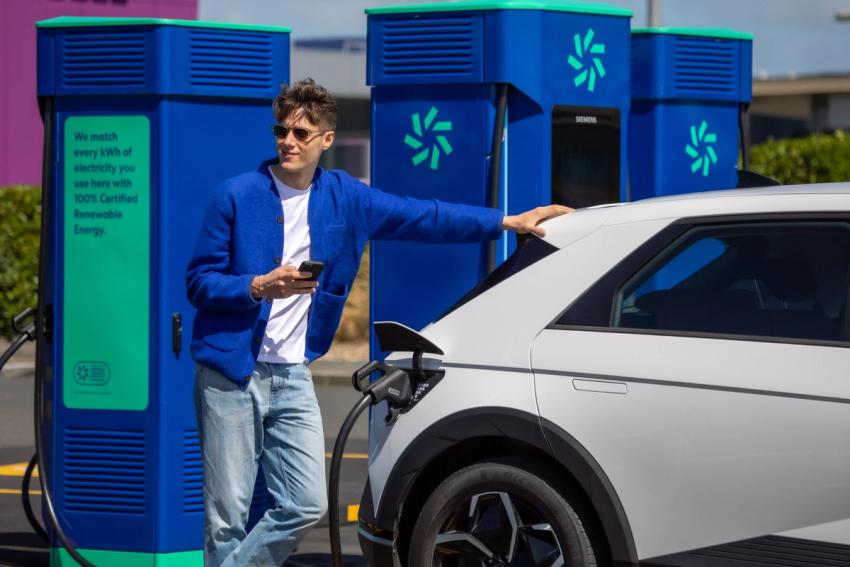
You’ll often have a choice between the fastest route and the more scenic one. An EV doesn’t mean you have to avoid the interesting roads; it just means you want to understand where the chargers are on each route.
Scenic routes, efficient routes and charging locations
We have deliberately placed many Zero chargers at genuine destinations or natural pause points, like hot pools, shopping centres, marinas and small town hubs, so that even a slower route can feel relaxed and well supported rather than risky.
If this is your first EV road trip, keep day one simple. Plan shorter legs, choose towns with multiple charging options and aim to arrive at your overnight stop with a decent margin. Once you have a day or two under your belt and you’ve seen how your car behaves under load, you can stretch the route a little more confidently.
Finding the right charger: Using fast charging networks
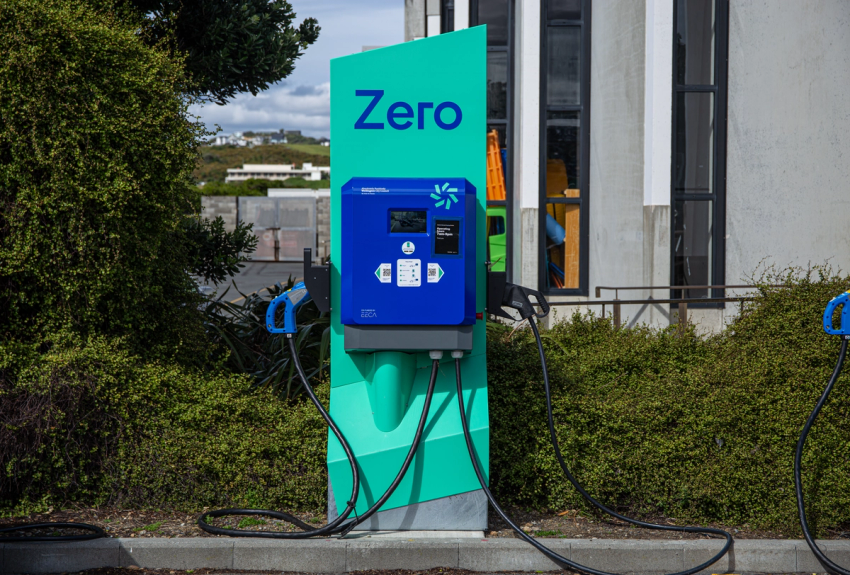
New Zealand’s public charging landscape is made up of several networks, each with their own apps and pricing. Zero by Meridian Energy sits alongside these as a growing network with a mix of AC and DC chargers, accessible to any EV driver, not just our Meridian electricity customers.
For trip planning, it helps to understand the main types of public chargers you’ll see.
AC public chargers
These are ideal for top up charging when you plan to be parked for a while, for example at a sports field, supermarket or cinema. Zero AC chargers are typically in these sorts of locations. They’re faster and safer than plugging into a standard household socket, but slower than DC.
DC fast and rapid chargers
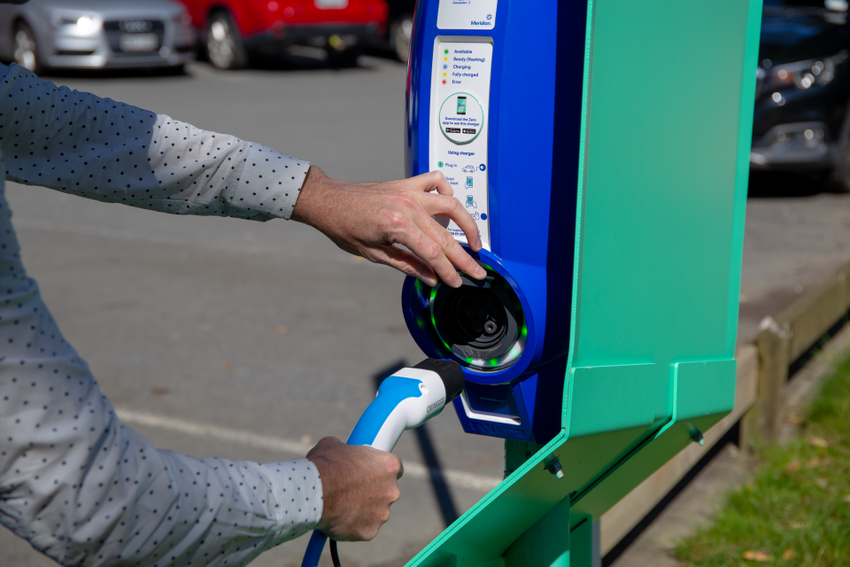
These units convert power to DC at the charger itself and feed it straight into your battery. They’re often described as rapid charging and are a good choice when you’re on the move and want a quick boost to reach the next destination. We’re steadily adding more DC Zero chargers around the country, particularly on key holiday routes.
Using Zero tools to pick stops
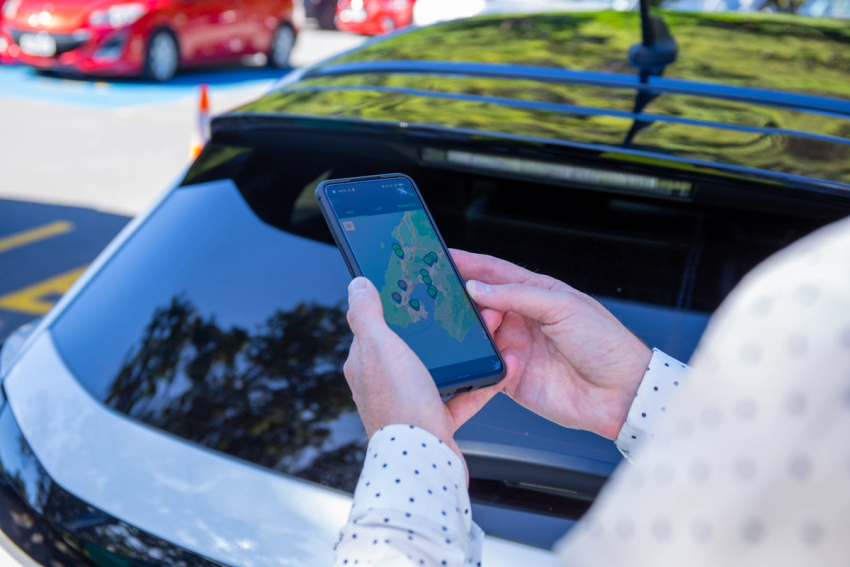
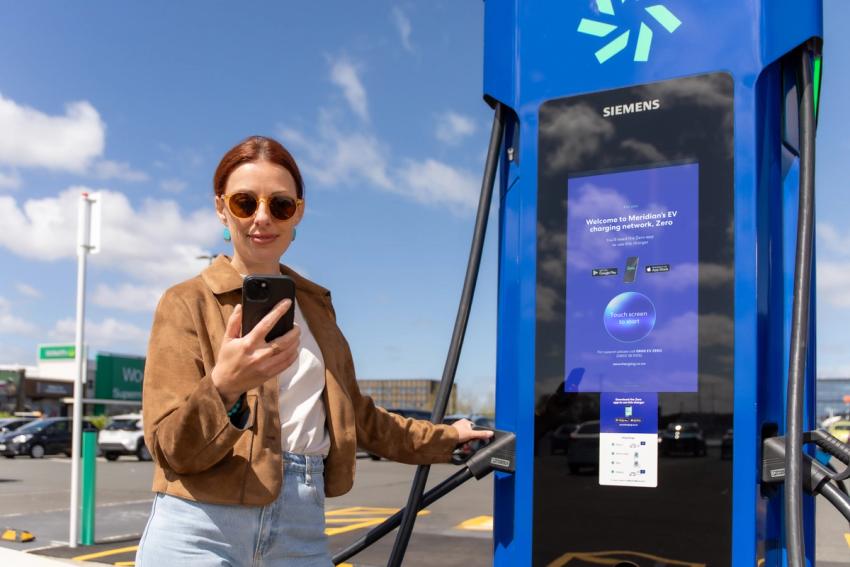
On a road trip, you’ll usually lean on DC chargers for the longer legs and use AC chargers where you plan to stay put for a few hours. The Zero app and our locations page show you what type of charger is at each site, the maximum power, connector types and current pricing. Real time availability is also important; there’s no point aiming for a charger that is offline or fully occupied. The Zero app lets you see whether a unit is in use and you can start or stop sessions from your phone.
When your preferred charger is busy or offline
If you arrive and your preferred DC charger is taken, you have options. You might plug into an AC unit at the same site (if available) while you wait or decide to stay a little longer and let the AC do its work while you have a proper meal or explore the area.
If a charger is out of service, most networks display a support number on the unit. With Zero, contacting support can sometimes get a charger reset remotely, and if not, you have at least helped flag the fault so it can be fixed quickly.
The main thing is to treat the charger landscape as flexible rather than fixed. Know your alternatives, stay calm if a stop doesn’t go to plan and use the tools in your pocket to find the next best option.
Solving the access and range challenge
Remote roads without the stress
The question many people still ask is: what about the gaps? New Zealand has long stretches of rural highway, wild coastlines and alpine passes where you’re a long way from a big town. It’s natural to wonder whether an EV can cope.
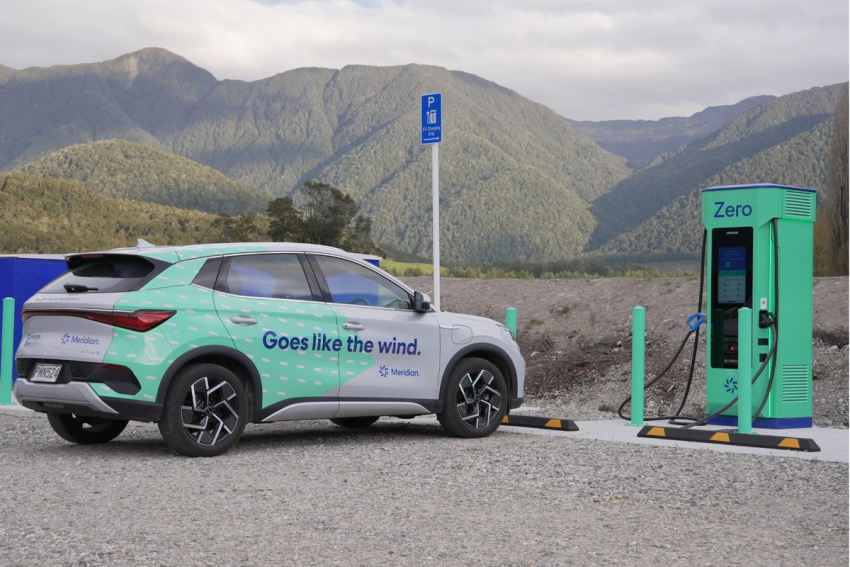
This is where strategic charger placement matters. The Zero network is focused not only on city centres but also on key connecting roads, such as Springs Junction, where our clever off-grid system using battery storage powers daytime charging without drawing heavily on the local supply. Locations like this link regions together and turn what used to be a nervous EV stretch into a more predictable trip.
Always plan a backup option
When you’re planning a route through more remote areas, work out your primary charging plan, then map at least one backup stop. For example, if you’re driving between Canterbury and the West Coast, you might plan a main charge at Springs Junction and keep a secondary stop in mind on either side, using chargers from other networks if needed. On a North Island loop, you might treat a Zero charger in a regional hub as your anchor and supplement with community chargers or other providers in between.
In terms of how far you can safely travel between charges, it’s sensible to avoid running close to empty. If your vehicle shows 350km of range, don’t plan a 330km leg and assume it will be fine. Hills, heat, headwinds, a full boot and a bike rack all nibble away at that margin. Aim instead to arrive at your next stop with 15-25% still in the battery.
Simple ways to stretch your range
When range is tight, you can stretch it with small adjustments. Dropping your speed a little on the open road can make a noticeable difference, because aerodynamic drag rises quickly as speed increases. Using climate control thoughtfully helps too; on a mild day you might be comfortable with fan and ventilation rather than full air conditioning.
Maximising regenerative braking by using appropriate drive modes on downhill sections gives you back energy that would otherwise be lost as heat. Taken together, these habits mean that even in the more remote parts of the country, an EV road trip is manageable with a bit of thought and a willingness to be flexible!
Charging station locations across New Zealand
Major North Island roads
One of the easiest ways to build confidence is to look at where chargers already are. The picture changes every month, but some patterns are clear.
In the North Island, you’ll find clusters of Zero chargers and other public units around the main travel routes. There’s options through Northland, in and around Auckland, along the Waikato corridor and down through the central and lower North Island. Places like Whangārei, Kerikeri, central Auckland, Hamilton, New Plymouth, Palmerston North and Wellington all have convenient Zero locations near parks, shopping centres or waterfront walks. Many of these were chosen because they’re the sort of places you would stop anyway for food, a stroll or a swim.
On a classic Auckland to Wellington run, you can think of your charging in stages. Top up in or around Auckland before you leave, use central Waikato as a natural halfway pause, then treat the lower north as your final anchor before rolling into the capital and its network of city and Hutt Valley chargers.

South Island routes and regional hubs
In the South Island, the network connects a different set of favourite routes. Coming off the ferry at Picton, you can cross to Nelson and Tasman, where Zero chargers in places like Stoke and Kohatu make it easy to explore the beaches and national parks, while keeping an eye on your range. Heading down the West Coast, strategically placed sites around Punakaiki, Springs Junction and other small towns link the wild coastline to the Canterbury Plains.
Canterbury itself is well served, with chargers across Christchurch and surrounding centres like Rangiora, plus key stops further south in Ashburton, Timaru and Twizel. Many of these are close to supermarkets, cafés, retail parks or attractions, so charging becomes a natural extension of your visit rather than a separate errand.
Hidden gems and end of the line stops
Right at the bottom, Southland and Invercargill give you a satisfying full island finish, with public chargers near parks, sports grounds and the city centre, so you can stretch the legs and recharge people (and your car) at the same time.
The easiest way to keep on top of the latest locations is to use the Zero map alongside other national tools. NZTA has a journey planner and an EV map you can include in your itinerary planning. Treat the map as a menu of options rather than a rigid script and you’ll quickly see how much of the country is already within easy reach of an EV.
Do you need your own cable for public EV charging?
Making sense of connector types
Public charging in New Zealand uses a few main connector types:
- Most modern New Zealand EVs use ‘Type 2’ for AC charging and ‘CCS’ for DC fast charging.
- Many Japanese imports like older Leaf’s use ‘Type 1’ for AC and ‘CHAdeMO’ for DC.
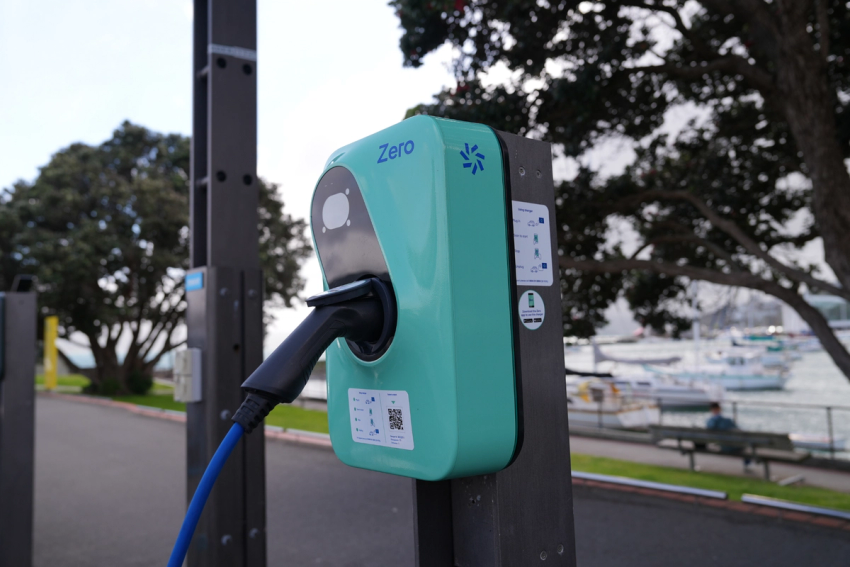
When you pull up to a DC fast charger, the unit will have its own tethered cables attached. You simply plug the appropriate connector into your car and start the session.
When you need to bring your own cable
AC public chargers are different. These often present as a socket rather than a trailing cable, especially in council car parks, sports grounds and some Zero locations. To use them, you need to bring your own cable with the right ends for your vehicle and the charger.
For a longer road trip, it is smart to pack:
- Your AC public charging cable
- Your portable three pin home cable and adaptor for emergencies
- Any plug adaptors recommended by your manufacturer
Using cables as part of your backup plan
That way, if you arrive somewhere with only AC sockets or you stay at an accommodation provider with an outdoor plug, you have choices. In a genuine pinch, a standard three pin trickle charge is slow but still better than sitting completely stranded while you wait for roadside assistance.
Our app makes it clear which of our chargers are tethered DC units and which are AC sockets. Check this before you leave home so you know exactly what to throw in the boot for your roadie!
Practical road trip tips
Making charging time part of the holiday
Once the planning is done, the roadie itself should feel like a holiday, not a logistics exercise. A few practical habits can make a big difference.
Treat charging stops as proper breaks rather than something to rush through. Many Zero chargers are deliberately located near cafés, parks, shops or attractions, which makes this easy. While the car tops up, you can grab a coffee, sit by a river, walk a waterfront loop or let the kids loose on a playground instead of sitting in the driver’s seat staring at a screen.
Using overnight charging to your advantage
Overnight charging is one of the biggest advantages of EV travel. If your accommodation offers EV charging, even just a normal outdoor socket, you can effectively refuel while you sleep and leave in the morning with a full battery. It’s worth asking ahead when you book. Some hotels and motels now offer dedicated EV parking and may appear on EV charging maps, while others are happy for you to plug into an ordinary outlet if you bring your own cable.
In terms of what to pack, think about both comfort and contingencies:
- Plenty of water and snacks so you’re not caught short if a leg takes longer than expected
- A sensible toolkit and tyre repair or inflation kit, just as you would for any long trip
- Your EV cables and adaptors in a clearly labelled bag
- Layers and sun protection for waiting outside the car
Also consider weight. Overloading the car with gear you don’t really need will dent your range and might mean more charging stops than you had planned. EVs are generally efficient, but physics still applies.
The future’s looking good
EV road trips in Aotearoa are only going to get easier from here. Public charging networks are expanding, fast DC units are appearing on more routes and the technology in the cars themselves continues to improve. We’re investing in both everyday urban chargers and those strategically placed in smaller towns and remote corridors for Zero, so that a summer loop of the country in an EV feels more like the norm than an experiment.
If you’re on the fence about taking your first EV roadie, now’s a great time to give it a go. Do a little planning, download the key apps, sign up to Zero, pack your cables and some snacks and build a route that strings together places you actually want to stop. Treat the charging network as a way to discover new beaches, hot pools, lookouts and small town bakeries rather than just a power supply.
As a final confidence boost, keep this simple checklist in mind before you leave:
- Know your car’s realistic range in different conditions
- Map your main charging stops and at least one backup in each region
- Set up the Zero app and any other networks you plan to use
- Pack your AC cable, home adaptor and basic roadside kit
- Get some roadside assistance coverage
- Aim to arrive at each charger with a comfortable buffer
With those basics sorted, you’re well placed to enjoy emission-free travel through some of the most beautiful landscapes in the world, at a pace that suits both you and your EV!
Additional resources
- About Zero Chargers
- Find A Zero Charger
- New To EV? Here’s our ownership guide - Meridian Energy
- Everything you didn’t know about EV servicing - AA
- Road Safety Resources - NZTA