What does long distance EV travel cost in New Zealand?

For many people new to electric vehicles, long distance travel is where cost questions really surface. You charge at home, your power bill nudges up and your car quietly does its job. Road trips feel different. You’re away from your home charger, relying on public infrastructure and paying per stop - rather than per month.
That shift can feel unsettling at first. In reality, long distance EV travel in New Zealand is already very workable.
Understanding what you’re paying for and what influences those costs goes a long way toward making EV road trips feel exciting - rather than anxiety inducing.
Starting with the basics of EV travel cost
When people ask what long distance EV travel costs, they often want a simple dollar figure. The more useful starting point is understanding how energy use works, because that’s what ultimately drives the cost.
Everything begins with your battery. Its size, how much of it you use between stops and how efficiently you drive determine how often you need to charge and how much energy you draw each time.
Battery size sets the baseline
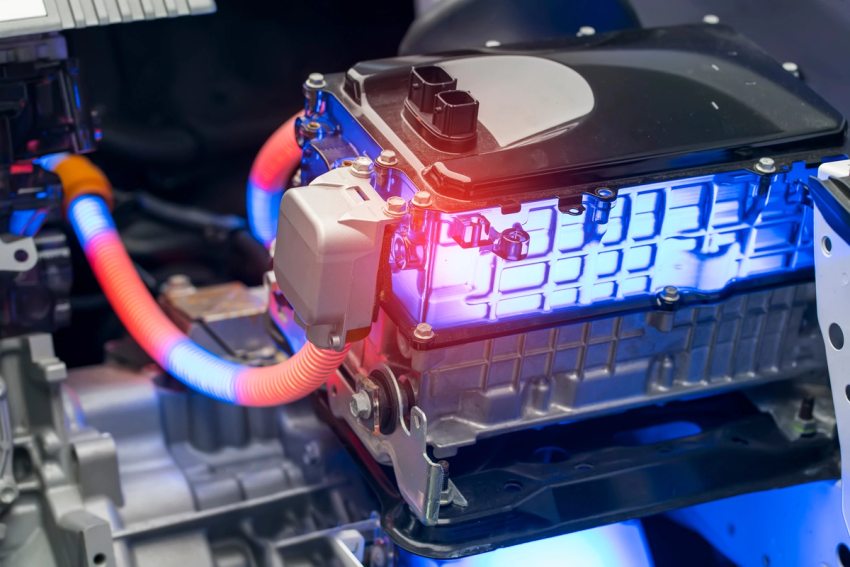
Battery capacity is measured in kilowatt hours. A larger battery allows you to travel further between charges, but it also means there’s more energy to replace when you plug in. A smaller battery costs less to top up, but you may need to stop more frequently on longer journeys.
As Meridian Energy Senior Development Engineer, Neil Soper, explains, the most useful mindset shift for new EV drivers is to stop thinking in terms of tanks and refuels, and start thinking in terms of energy.
“If you know the capacity of your vehicle, that’s your starting point,” says Neil. “Once you understand how big your battery is and roughly how much of it you’ll use between stops, you can get very close to what a journey is going to cost. The bigger the battery the further you can go, but the more energy it takes to fill. It’s a simple trade off.”
Neither option is better or worse in isolation. They simply shape your road trip. Once you know your battery size and have a sense of how much of it you typically use between stops, you can estimate your travel costs easily.
Public chargers price energy, not kilometres
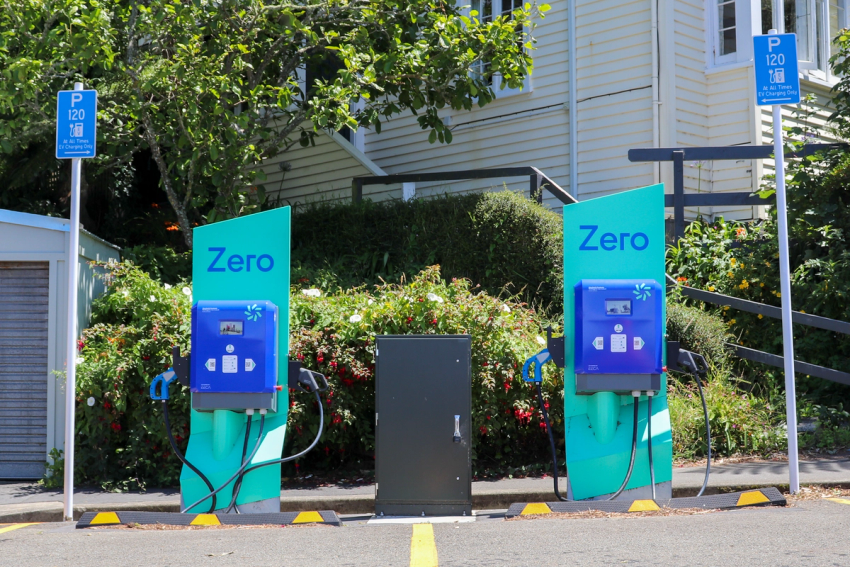
Public EV chargers charge for the energy you take, not the distance you travel. Two drivers can stop at the same charger and pay very different amounts depending on how full their battery is when they arrive and how much they choose to charge.
That’s why EV travel costs are less about the length of the journey and more about how much energy you consume getting there. Hills, speed, load and driving style all matter.
How public EV charging is priced in New Zealand
Public charging prices vary across networks. Some operators price based on charger speed, with higher powered chargers costing more per kilowatt hour. Others apply a flat rate across their entire network.
This pricing reflects the real cost of building and operating infrastructure. High powered chargers are expensive assets, particularly in remote or rural locations, and pricing is one way operators recover that investment.
Why faster is not always cheaper
There’s a common assumption that the fastest charger is always the best option, but it’s not always true.
If your vehicle can’t take full advantage of a very high powered charger, you may pay a higher rate without gaining meaningful time savings. The charger is capable of more than your car can accept, so you’re not charging faster, just paying more per unit of energy.
“Always heading for the fastest charger can be a false economy,” says Neil. “If the charger is massively overpowered compared to your vehicle, you’re not benefiting in time and you’re not benefiting financially either. You’re just paying more than you need to.”
Matching charger capability to your vehicle often delivers the best balance of cost, speed and overall trip flow.
Flat rate pricing and cost certainty
Some networks use a flat per kilowatt rate across all chargers. This removes a layer of complexity for drivers. You don’t need to think about whether a charger is going to cost more simply because it’s higher powered.
For many drivers, this makes budgeting easier and reduces decision fatigue on the road. You choose a charger based on location and convenience, not pricing nuance.
How much does a typical public charge cost?
There’s no single number that applies to everyone, but real world ranges are useful.
For a medium sized EV with a battery of around 60 kW/h, a typical public charging stop might cost somewhere between $40 and $55 depending on pricing, your vehicle and how much energy you take on. That amount of energy can deliver roughly 250 to 300 km of driving in normal New Zealand conditions. Understanding precisely how far a public charger gets you with your own vehicle and driving does some real world testing.
For drivers used to charging mostly at home, seeing a $40 or $50 transaction can feel confronting. The important context is that you’re compressing what would normally be spread across weeks of home charging into a single visible moment.
Even at the higher end of that range, public EV charging is generally still cheaper than refuelling a petrol or diesel vehicle for the same distance.
Home charging versus public charging costs
Charging at home is usually cheaper than charging on the road.
At home, you’re buying electricity directly, often at off peak rates. The charger on your wall is a one off investment rather than a commercial asset that needs to earn revenue. Public charging includes the cost of hardware, installation, maintenance, grid connection, land access, software and ongoing operation.
Those costs are reflected in the price you pay per kilowatt hour.
Why starting full matters
One of the simplest ways to reduce road trip costs is also one of the easiest. Start with a full battery.
Charging at home before you leave reduces how much energy you need to buy at public rates. Even a partial top up before departure can meaningfully lower your total travel cost. Public chargers work best as top up points rather than substitutes for home charging.
What actually influences EV travel cost on a road trip
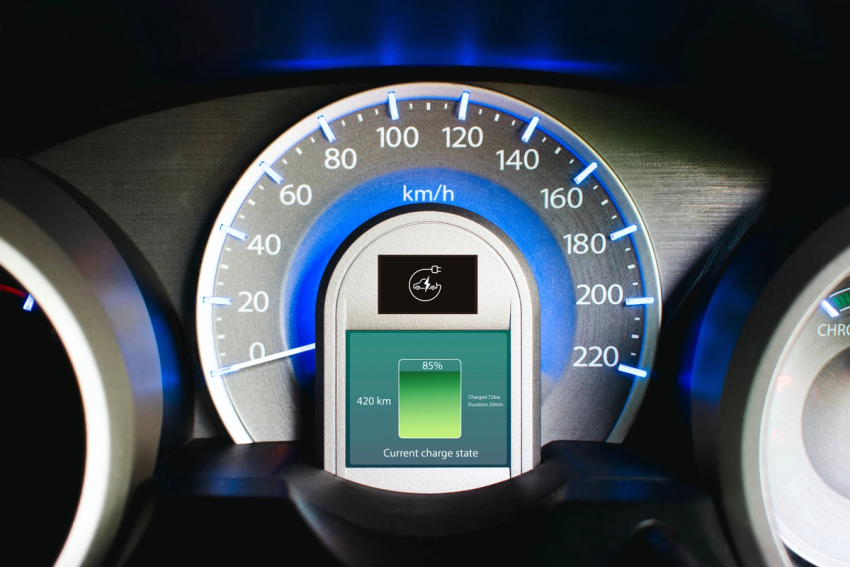
Beyond pricing, how you drive and what you carry have a significant impact on energy use.
Driving style and efficiency
Smooth acceleration and steady speeds use less energy. Hard acceleration increases consumption, regardless of whether you’re driving electric or petrol. EVs make this relationship more visible because energy use is tracked so precisely.
Regenerative braking also plays a major role. Using regeneration effectively allows you to recover energy that would otherwise be lost when slowing down, particularly in stop/start traffic or down hilly terrain.
Terrain and load
New Zealand roads are rarely flat. Long climbs, winding passes and variable conditions all influence energy use. Carrying extra weight also matters. Fully loaded vehicles require more energy to move, especially uphill.
This doesn’t make EVs unsuitable for road trips. It simply means energy use varies with conditions, just like fuel consumption in conventional vehicles.
Tyre pressure and simple checks
One of the cheapest efficiency gains available is proper tyre pressure. Under inflated tyres increase rolling resistance and energy use. A quick check before a long trip can deliver real range improvements with no financial cost.

Regenerative braking and long distance efficiency
Regenerative braking is one of the less intuitive aspects of EV driving, but it becomes particularly valuable on long trips.
When going downhill or slowing repeatedly, regeneration sends energy back into the battery instead of wasting it as heat. On routes with significant elevation changes, this can noticeably extend your range.
Different manufacturers implement regeneration differently. Some rely on accelerator lift off, creating a one pedal driving experience. Others blend regeneration into the brake pedal, only engaging physical brakes when additional stopping power is required. Many vehicles also allow drivers to adjust regeneration strength in their settings.
“Some people love running maximum regeneration all the time,” says Neil. “I’m in that camp. I just like single pedal driving. Other people prefer using two pedals and that’s fine too. What matters is understanding what your car is doing so you can use it properly, especially on long downhill stretches.”
Spending time understanding how your specific vehicle behaves can improve both comfort and efficiency.
Comparing EV road trip costs with petrol and diesel
Public EV charging can feel expensive because it’s visible. Petrol and diesel costs are more familiar, but they are no less real.
Even higher priced public chargers are typically cheaper per kilometre than petrol or diesel, especially when fuel prices rise. The difference is that EV drivers see infrastructure costs directly rather than having them hidden in fuel margins and taxes.
For drivers who charge mostly at home, the jump to public charging prices can feel sharp. However, most EV drivers still spend less on energy overall.
Road user charges and budgeting properly
Road user charges (RUCs) are another factor EV owners need to account for. For drivers new to paying RUCs, this can be an adjustment, particularly if they’re used to petrol vehicles.
The key is awareness. Tracking kilometres travelled and staying on top of your RUC purchases avoids surprises and makes total travel costs easier to manage. When budgeting for long trips, include RUCs alongside charging costs for a complete picture.

Common misconceptions about EV road trips
Outdated myths about EVs still persist. They’re often seen as short range city cars rather than capable long distance vehicles.
That perception made sense years ago. It doesn’t reflect the reality of modern EVs or New Zealand’s charging infrastructure. Road trips through most rural and remote regions are now well supported and vehicle capability continues to improve.
“A lot of people still think of EVs as milk floats,” says Neil. “But modern EVs just keep getting better. Five years ago I might have said they were mainly city cars. That argument doesn’t really hold up anymore, especially for road trips that aren’t an everyday thing.”
For most people, a single EV can comfortably handle daily driving and occasional long road trips without the need for a second vehicle.
Avoiding cost surprises on the road
One of the advantages of EV charging is transparency. Pricing is clearly displayed in public charging network apps, allowing drivers to check costs before arriving and make informed decisions.
This visibility makes budgeting easier. You’re rarely caught out by unexpected pricing, compared with fuel costs that can sometimes feel unpredictable. With even light planning, EV road trip costs become predictable rather than stressful.
A more settled way to think about EV road trips
Long distance EV travel in New Zealand is no longer unusual. It’s becoming part of everyday driving life.
As vehicles continue to improve and infrastructure expands, road trips will feel increasingly routine. Understanding how costs work is what allows that shift to happen smoothly.
Once you know what influences energy use and how pricing is structured, EV road trips stop feeling like something you have to think about and start feeling like just another way to get where you’re going.
Other EV travel resources
- Zero powered by Meridian - our growing EV public charging network across Aotearoa
- North Island EV Road Trip Guide - find the best stops to take your EV
- South Island EV Road Trip Guide - a breakdown of popular destinations right across the south